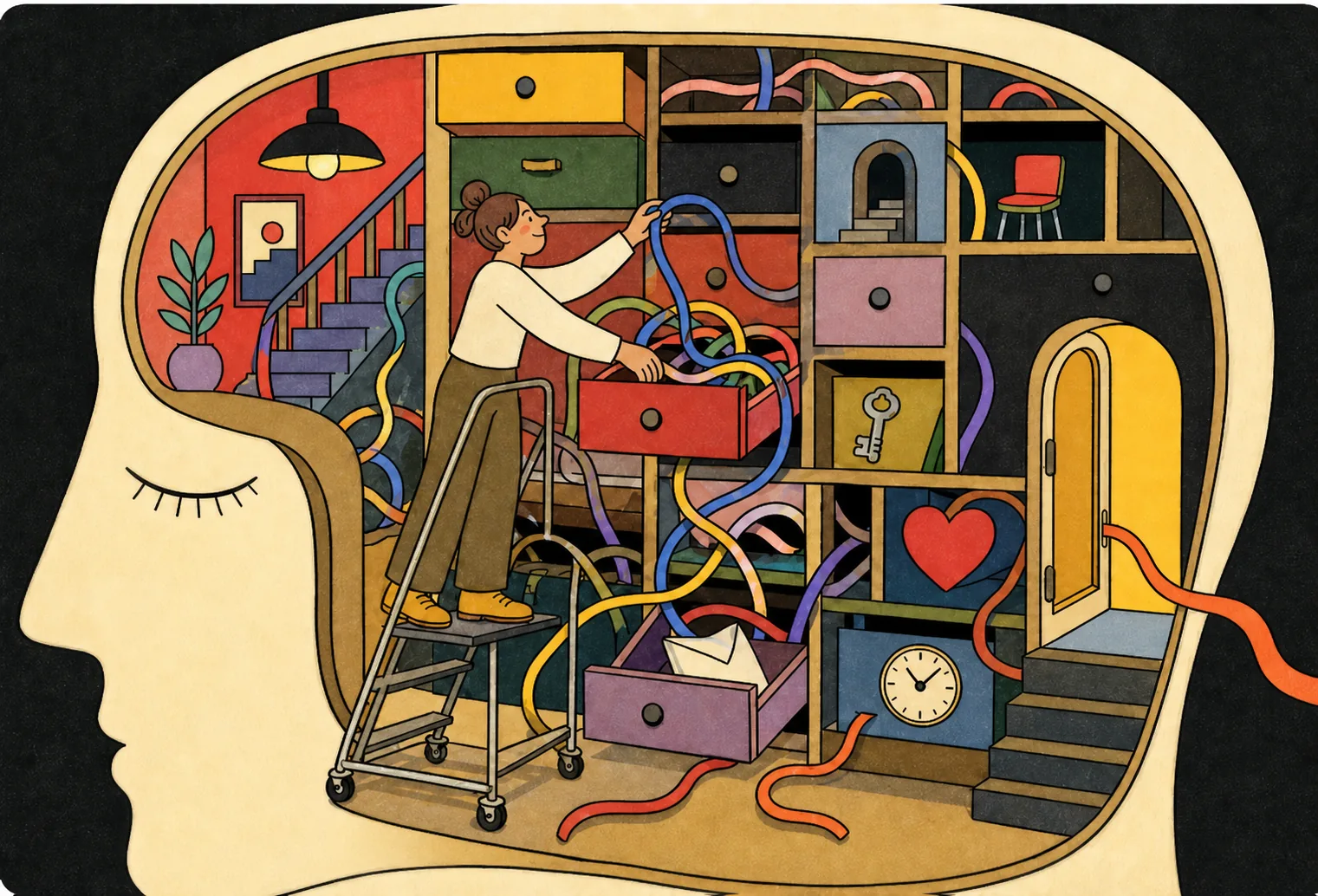
Self-reflection is not the same as staring at your life until it confesses something.
It is more useful than that. It is the gentle practice of noticing what is happening, naming what matters, and giving yourself enough space to choose a next step. Not a ten-step plan. A next step. For lighter, day-to-day questions, the daily prompts ask less of you.
Facts — ____________________
Feeling — ____________________
What would support me next — ____________________
Answer in that order. “I canceled two plans and have been tired by 3 p.m.” is easier to work with than “I am failing at everything.”
To understand what is going on
- What has been taking more energy than I expected?
- What has been giving me energy lately?
- What am I calling “fine” that is not really fine?
- What pattern have I noticed in my mood this week?
- What am I feeling underneath the first feeling?
- What am I avoiding because I do not know how to begin?
- What am I tolerating that I do not have to keep tolerating?
- What has been harder than it looks from the outside?
To get unstuck
- What is the actual problem, in one sentence?
- Which part of this is in my control?
- Which part needs time rather than a solution?
- What would “good enough” look like here?
- If I made this 20 percent easier, what would change?
- What advice would I give a friend in this exact spot?
- What is one decision I can postpone—and one I can make today?
- What tiny action would make tomorrow kinder?
To check in with your values
- When did I feel most like myself recently?
- What am I making room for? What is getting squeezed out?
- What do I want more of in an ordinary Tuesday?
- What does success look like when no one is watching?
- What am I doing because I genuinely want it?
- What am I doing mostly to avoid disappointing someone?
- What is worth protecting this month?
- What am I learning about the way I work, rest, or love?
- What do I want to remember before I rush into next week?
A better way to answer a reflective prompt
Start with facts before interpretation. “I canceled two plans and have been tired by 3 p.m.” is easier to work with than “I am failing at everything.” Then add the feeling. Then ask: what would support me next? Reflection should help you see yourself more clearly, not make you a harsher manager of your own life. If the day was simply hard, a single honest sentence may fit better than a reflective question.
If a prompt opens something heavy or makes you feel unsafe, stop. A journal can be supportive; it does not have to carry everything alone.